
McMullin Madagascar Musings
McMullin Madagascar Musings
15 years of Volunteer Urology Service Development
by Dr Richard McMullin, Volunteer Urologist
In mid-2013, I received an unexpected phone call from Sue Chapman, who had been our Urology trainee in Ballarat way back in 1995. It was an invitation to join her on a medical aid mission in Madagascar in October. Like many doctors, I’d been attracted to the idea of medical aid, but had not made the first step. Sue had already made four visits, starting the program in 2009.
It’s hard to prepare for the shock of confrontation when you land in Antananarivo. The sweaty crowds, the bustle, the rattling taxicabs and cattle drawn carts, the pot-holed roads, the dilapidated French colonial buildings and the oppressive summer heat draw you into this poor but mesmerising country.
Our medical base is Toliara, a further hour by plane in the southwest of Madagascar. Flat, dusty and arid, it’s hard to imagine a harsher place to eke out a living, yet hundreds of thousands somehow do.
Here we confront sinewy elderly men with urinary catheters and hopeful eyes, many having walked for days from their villages in the countryside, accompanied by loyal wives, sons and daughters. Some have not passed urine for months or years, and ADFA provides their only chance for resuming normal life.
For the team to do this safely and efficiently, much preparation is needed. Sue Chapman explained the infrastructure needed for us to make a difference. Nothing can be taken for granted. We are grateful for Toliara to provide a clinic to see our patients, a room in which to operate and local personnel to translate for us and care for the patients, but everything else comes via ADFA. Even the operating table, the anaesthetic machine and diathermy are second-hand Australian gear.
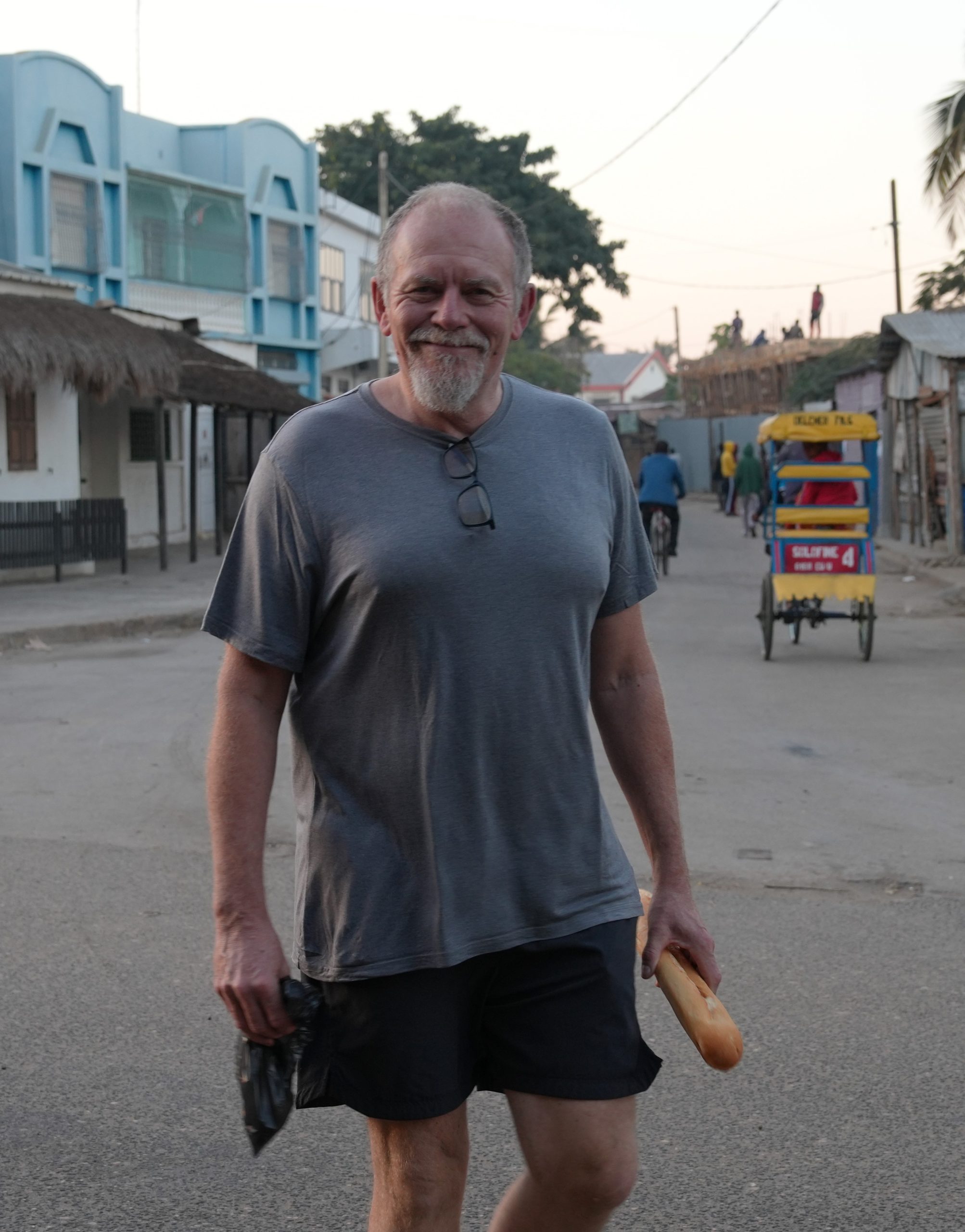
Photo caption: Dr Richard McMullin, Volunteer Urologist

Volunteer Urology team with hospital and ADFA staff, Toliara, July 2024
Prostate operations may not seem the most glamorous or inspiring form of medical aid, but they exemplify the pragmatic nature of effective philanthropy. Mostly the clinical problem is easily identified, requires minimal preoperative work up, is effectively treated with one operation and does not need follow up. There is minimal access to sophisticated pathology and medical imaging and no time for follow up appointments, so we can’t diagnose and treat complex cancers or obstructed kidneys.

Dr Richard McMullin & Dr Melvyn Kuan, Toliara, July 2024
Prostate operations may not seem the most glamorous or inspiring form of medical aid, but they exemplify the pragmatic nature of effective philanthropy. Mostly the clinical problem is easily identified, requires minimal preoperative work up, is effectively treated with one operation and does not need follow up. There is minimal access to sophisticated pathology and medical imaging and no time for follow up appointments, so we can’t diagnose and treat complex cancers or obstructed kidneys.
In the grand medical tradition of “see one, do one”, my next visit to Madagascar was without Sue Chapman but all by myself. Not wanting to let the team down, I ensured I was ready for next time, spending months gathering surgical equipment and the never-ending list of single-use items needed for prostate surgery, from syringes to catheters and antiseptics to antibiotics. This was to be the pattern each year, and I also needed to gather a team. Thus, over the years, a whole cohort of medical professionals from Ballarat swelled the ranks of ADFA including at least 8 doctors and 6 nurses. Before long we had recruited Lydia Johns Putra and two of the three annual urology missions to Madagascar originated from Ballarat.
In my early visits I mentioned in passing that I did a little paediatric surgery and was almost at once inundated with small boys with hernias. Thus, I began such operations but soon found the numbers and complexity beyond my capacity. How lucky was I to meet Berni Troncoso, a masterful and delightful paediatric urologist from Chile then completing a fellowship at the Royal Children’s Hospital in Melbourne. Berni now flies in from Santiago each year and has further recruited a Melbourne colleague to consolidate a dedicated paediatric program. Treating hernias satisfies the pragmatic principles of medical aid: the clinical diagnosis is straightforward, the treatment effective and the benefits enormous.
After nine visits to Madagascar, I’ve now retired, having benefited from fascinating medical and cultural experiences and having worked with wonderful people, both from the pool of fabulous ADFA volunteers and those beautiful Malagasy workers who make it possible on the ground.
News
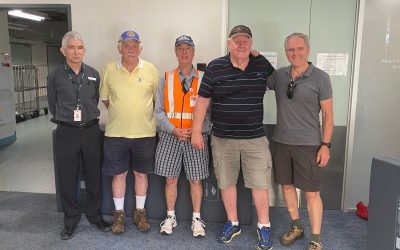
SJOG Subiaco Hospital Donates Hospital Beds
Thanks St John of God Subiaco Hospital for donating much needed equipment to Australian Doctors for Africa. Over three afternoons, with the fantastic help of volunteers from the Lions Club of Claremont Nedlands and ADFA, we loaded: * 46 hospital beds and mattresses,...
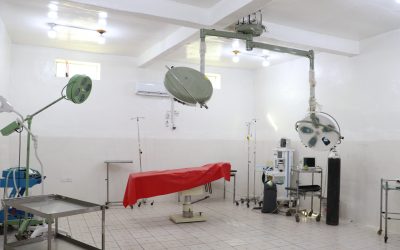
Renovating Operating Theatre at Hargeisa Group Hospital
The finished renovation at Hargeisa Group Hospital looks amazing - what an improvement, especially the operating theatre! The enhancements will provide a safe, clean environment for the orthopaedics department and improve medical care for Somaliland people in need....
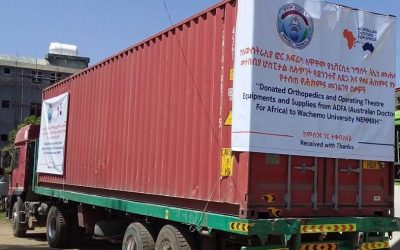
Equipment for New Orthopaedic Department, Hossana, Ethiopia
The Wachemo University Nigist Eleni Mohammed Memorial Referral Hospital in Hossana gratefully received a 40ft sea container of donated medical equipment for their new orthopaedic wards. The equipment and supplies - operating tables, hospital beds, mattresses,...

Australian Doctors for Africa is a Registered Charity with the Australian Charities and Not-for-profits Commission
Australian Doctors for Africa is supported by the Australian Government through the Australian NGO Cooperation Program (ANCP)

Australian Doctors for Africa is a member of the Australian Council for International Development (ACFID) and is committed to full adherence with its Code of Conduct.
© Copyright Australian Doctors for Africa 2024 | ABN: 47 116 149 985 | Privacy Policy | Site by QSP
